




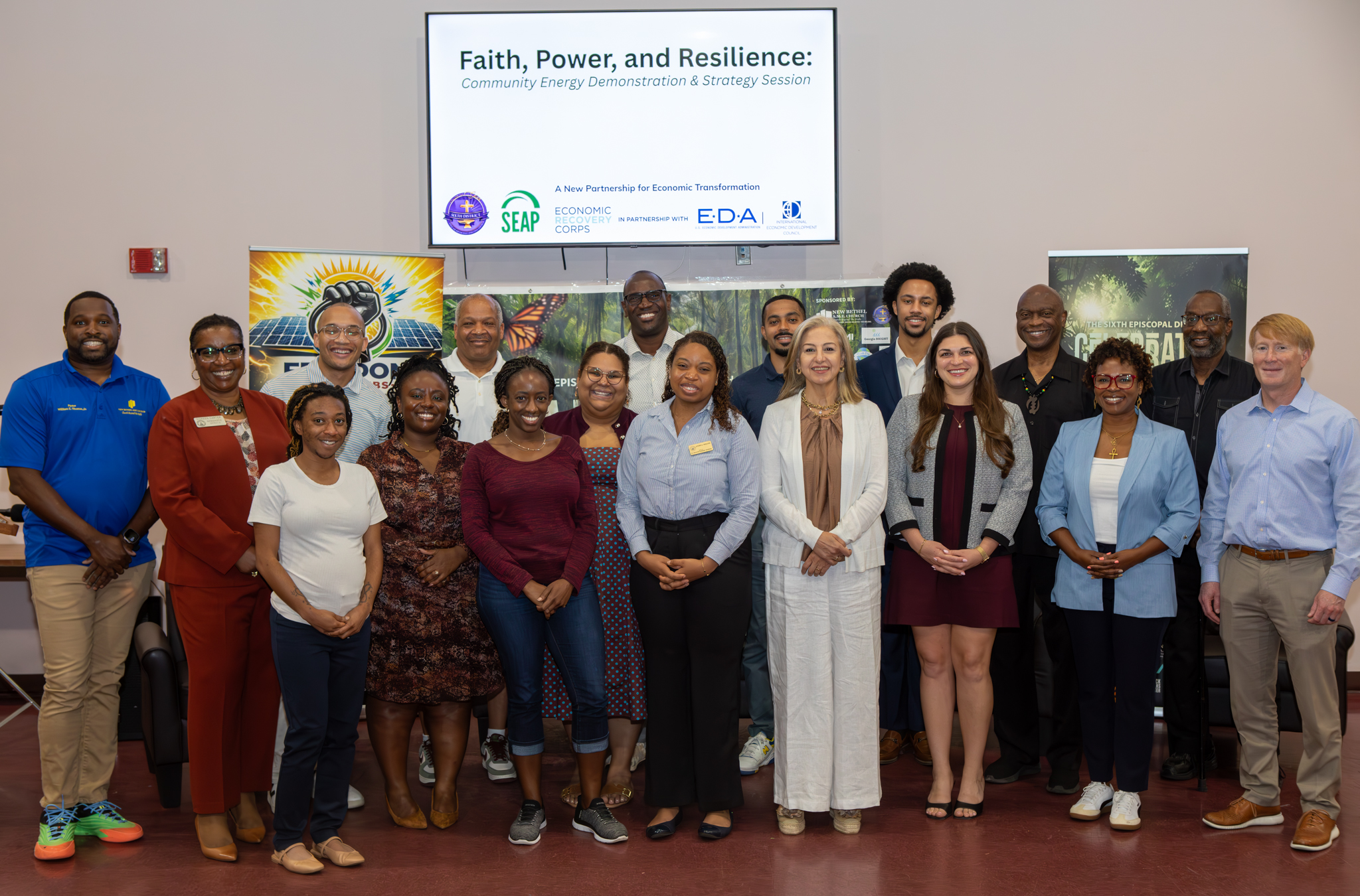
This month we mark the end of the Economic Recovery Corps fellowship and reflect with gratitude on all that was accomplished through sustained investment of time, knowledge, and public dollars into Georgia communities.
Economic Recovery Corps (ERC) launched in 2024 to build capacity in some of the hardest-hit and most economically distressed areas across the United States while cultivating the next generation of economic development leaders. By connecting 65 Fellows with communities across the country to deliver intensive capacity building support for 2.5 years, the ERC program activated regional economic development strategies and promoted innovation and knowledge-sharing between urban, rural, and tribal areas across the U.S. SEAP had the honor of serving as a host site and welcoming ERC Fellow Fenika Miller to the team.
Fenika has worked intensively with and for south Georgia communities to attract public dollars into development projects that make communities more prosperous and resilient.
A Green Future for Black Churches
Initially, Fenika’s ERC project focused on working with Georgia AME churches to adopt clean energy strategies using Direct Pay dollars. While working to bridge the information gap surrounding available funding options, Fenika initially encountered low interest in sustainable energy adoption—until Hurricane Helene hit the region in fall 2024. In the wake of the hurricane, churches accustomed to serving as a place of refuge and support for the community realized that energy independence would give them the ability to keep their doors open to others following disasters.
Just as these projects were gathering momentum, the Trump administration cancelled the Direct Pay program. Instead of giving up on the project, Fenika and the AME Sixth District leadership pivoted, sought new funding sources, and asked, “What is possible to do with what we have?”
Thanks to their commitment to the vision, the Sixth District microgrid project recently came online in Lithonia, Georgia. Not only was this a moment of celebration, it was an opportunity to share knowledge in the hopes that many more churches and communities will consider energy independence as part of how they serve others. Fenika and the AME Sixth District hosted an event in April 2026 called Faith, Power, and Resilience to inspire and educate others to do just that.
A Rural Model for Housing, Workforce, and Community Alignment
Cairo Councilwoman Annette Higdon secured a $2.5M One Georgia grant that served as a catalyst for a project that combines affordable housing and workforce development. The housing development includes about 150 single-family homes built on about 45 acres of land. The project also includes programmatic elements that address the barriers to developing and purchasing homes. The program will also include workforce training in the trades and homebuyer preparedness for local residents, which will boost economic opportunity for both residents and the community as a whole.
Fenika’s background in organizing, community outreach, and affordable housing combined with the ERC directive to assist with projects that advance equity and economic opportunity made this project a natural fit for the fellowship.
Reflecting on the Fellowship
“Through all the policy changes that came their way, Fenika and her partners stayed committed to putting public dollars where they belong: in Southern communities. The commitment to moving at the speed of trust and building real partnerships makes these projects an incredible example of how community development should be,” said SEAP Executive Director Genny Castillo.
We are thankful to the International Economic Development Council, US Economic Development Administration, and Economic Recovery Corps for the opportunity to serve as a fellowship host site and participate in the equity-centered development work that has taken place across the nation. We are also filled with gratitude to the City of Cairo, Georgia and the Georgia AME Sixth District for their commitment to their projects and for allowing us to support their efforts.
We are especially thankful to Fenika Miller and the ERC fellows for their hard work and determination over the past two and a half years, and look forward to seeing what they continue to accomplish.